
If you own or are buying a home in north-central or eastern Connecticut, you’ve probably heard about crumbling foundations. It’s one of the biggest issues in the state’s housing market, and it can have a major effect on value. Here’s a plain-English look at what it is, how appraisers handle it, and what you can do.
Key Takeaways
- Crumbling foundations come from concrete that contained pyrrhotite.
- The problem shows up most in north-central and northeastern Connecticut.
- A core test is the most reliable way to know for sure.
- Tested, clean, or replaced foundations hold value far better than untested or damaged ones.
- CFSIC may help eligible owners pay for testing and replacement.
What Causes Crumbling Foundations?
The problem traces back to concrete that contained a mineral called pyrrhotite. When pyrrhotite is exposed to water and oxygen over time, it breaks down and expands. That slowly cracks the concrete from the inside. Many affected foundations were poured from the 1980s onward, and the issue has been found most often in towns across Tolland, Windham, Hartford, and New London counties.
The damage usually shows up years after a home is built. Early signs can include:
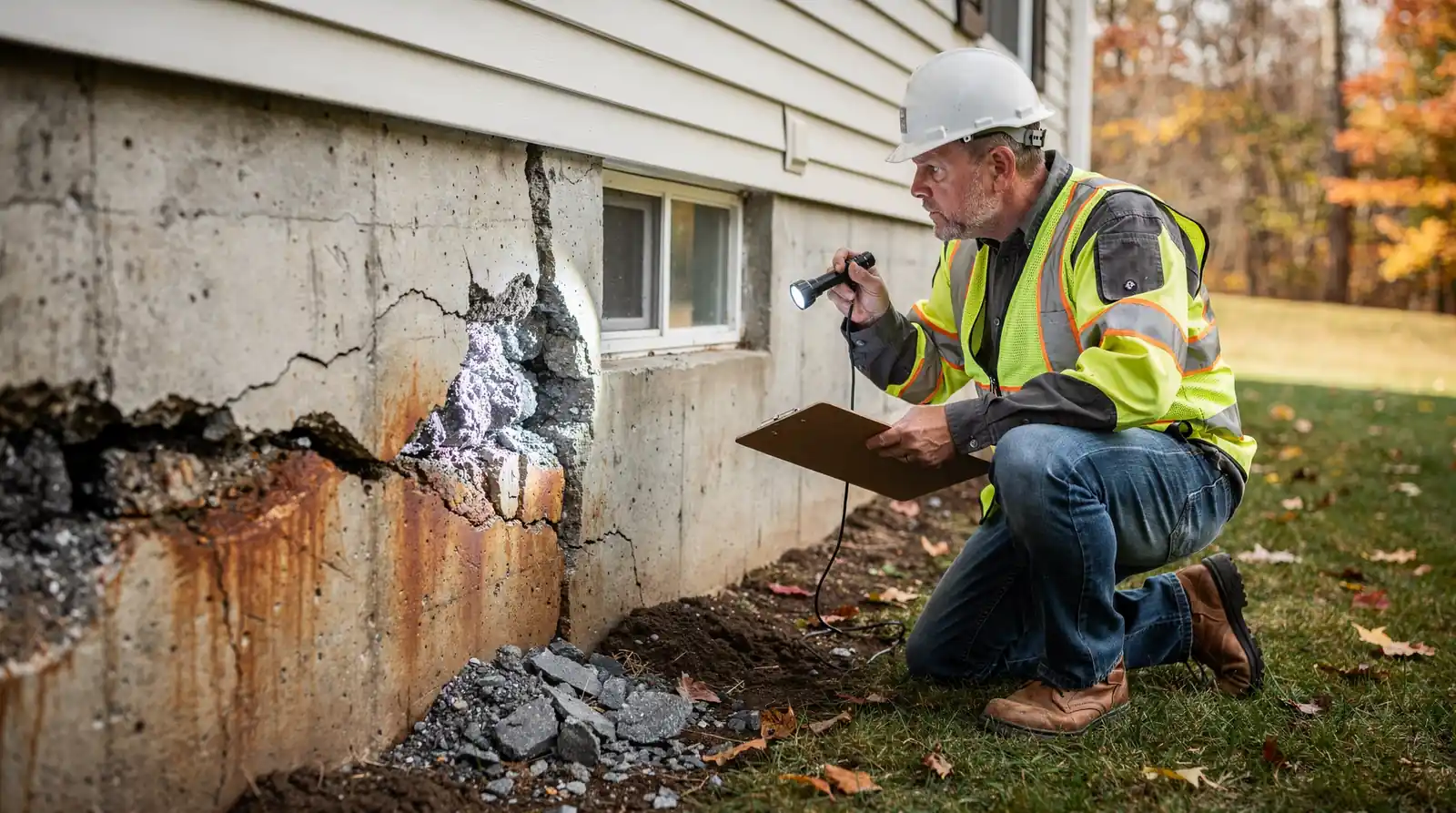
- Spider-web or map-pattern cracking on basement walls
- Horizontal cracks or bulging walls
- White, powdery residue or rust-colored staining on the concrete
- Doors and windows that start to stick
Not every crack means pyrrhotite. That’s why testing matters.
Where the Problem Shows Up Most
Crumbling foundations have been reported most often in north-central and northeastern Connecticut, in towns such as Tolland, Vernon, Ellington, Stafford, Willington, Coventry, Mansfield, Somers, Enfield, Manchester, and South Windsor. Homes in nearby towns and in parts of Massachusetts have been affected too. If your home was built from the 1980s onward in this part of the state, it’s worth finding out whether the foundation has been tested.
How Common Situations Affect Value
Every home is different, but here’s how buyers and appraisers usually look at the most common situations:
| Situation | What buyers and lenders see | Typical effect on value |
|---|---|---|
| Tested, no pyrrhotite found | Lower risk, documented | Usually little to no effect |
| Foundation replaced, with records | Problem solved and documented | Often close to similar homes without the issue |
| Not tested, no visible damage | Unknown risk in an affected area | Some buyers discount or ask for testing |
| Pyrrhotite confirmed, little damage yet | Known future repair | Usually a meaningful discount |
| Visible cracking and damage | Major repair needed soon | Largest discount; financing can be harder |
Step by Step: What to Do If You Suspect a Problem
- Look for the warning signs listed above and take dated photos.
- Get a visual inspection from a structural engineer familiar with pyrrhotite.
- Order a core test for a clear answer.
- Check CFSIC eligibility before starting any repair work.
- Keep every record: tests, reports, quotes, permits, and invoices. These matter for resale, refinancing, and appraisals.
How Is It Tested?
The most reliable test is a core sample, where a small cylinder of concrete is drilled from the foundation and analyzed in a lab. A visual inspection by a qualified engineer can also help, but a core test gives a clearer answer about whether pyrrhotite is present.
How Does It Affect an Appraisal?
An appraiser’s job is to report what the home is worth in its current condition, based on what buyers are actually paying. With crumbling foundations, a few things come into play:
- Condition. The appraiser notes visible cracking or damage. If a problem is suspected, a lender may require testing or an engineer’s report before a loan can move forward.
- Test results. A home with a clean core test, or a foundation that’s already been replaced, is in a much stronger position than an untested home with visible cracks.
- Comparable sales. Appraisers look at how the local market has treated homes with foundation issues, tested homes, and homes with replaced foundations, and adjust from there.
- Cost to cure. Replacing a foundation is a big project. Buyers factor that in, and so does the market.
Help for Affected Homeowners
Connecticut created the Connecticut Foundation Solutions Indemnity Company (CFSIC) to help eligible homeowners pay for foundation testing and replacement. Eligibility rules and funding limits apply, so check the program’s current guidelines or talk with a local attorney or contractor who works with it.
Buying or Selling a Home With This Issue
- Selling: Gather any test results, engineer’s reports, and repair records. If the foundation was replaced, have the paperwork ready. Connecticut’s seller disclosure form asks about known foundation problems, so talk with your agent or attorney about what to share.
- Buying: Consider a core test for homes in affected areas, especially those built from the 1980s onward. Ask for any prior test results.
- Pricing: A pre-listing appraisal can help you understand where your home stands before you list.
Need a Value for an Estate, Divorce, or Tax Appeal?
Foundation issues also affect estate appraisals, divorce appraisals, and property tax appeals. If your home has a confirmed problem, your assessment may not reflect it, and an independent appraisal can show the real value.
Frequently Asked Questions
Can a home with a crumbling foundation still be sold?
Yes, though it often sells at a discount, and financing can be harder. Many buyers pay cash or plan for replacement.
Does a replaced foundation restore value?
A properly replaced foundation with documentation usually helps a lot, since it removes the biggest risk for buyers.
Should I test a home that shows no cracks?
In affected parts of Connecticut, many buyers and owners test anyway, since damage can take years to appear. A clean core test can also help when you sell.
Does homeowners insurance cover crumbling foundations?
Coverage is often limited or denied for this kind of slow damage. Check your policy and talk with your agent, and look into CFSIC help.
Do you appraise homes with foundation issues?
Yes. We appraise residential properties anywhere in Connecticut and Florida. Request an appraisal or call 888-602-8322.
Conclusion
Crumbling foundations are one of the biggest issues in Connecticut real estate, but knowing where you stand makes it manageable. Testing, good records, and an accurate appraisal help you price a home, settle an estate, or appeal your taxes with confidence. Request an appraisal or call 888-602-8322.