
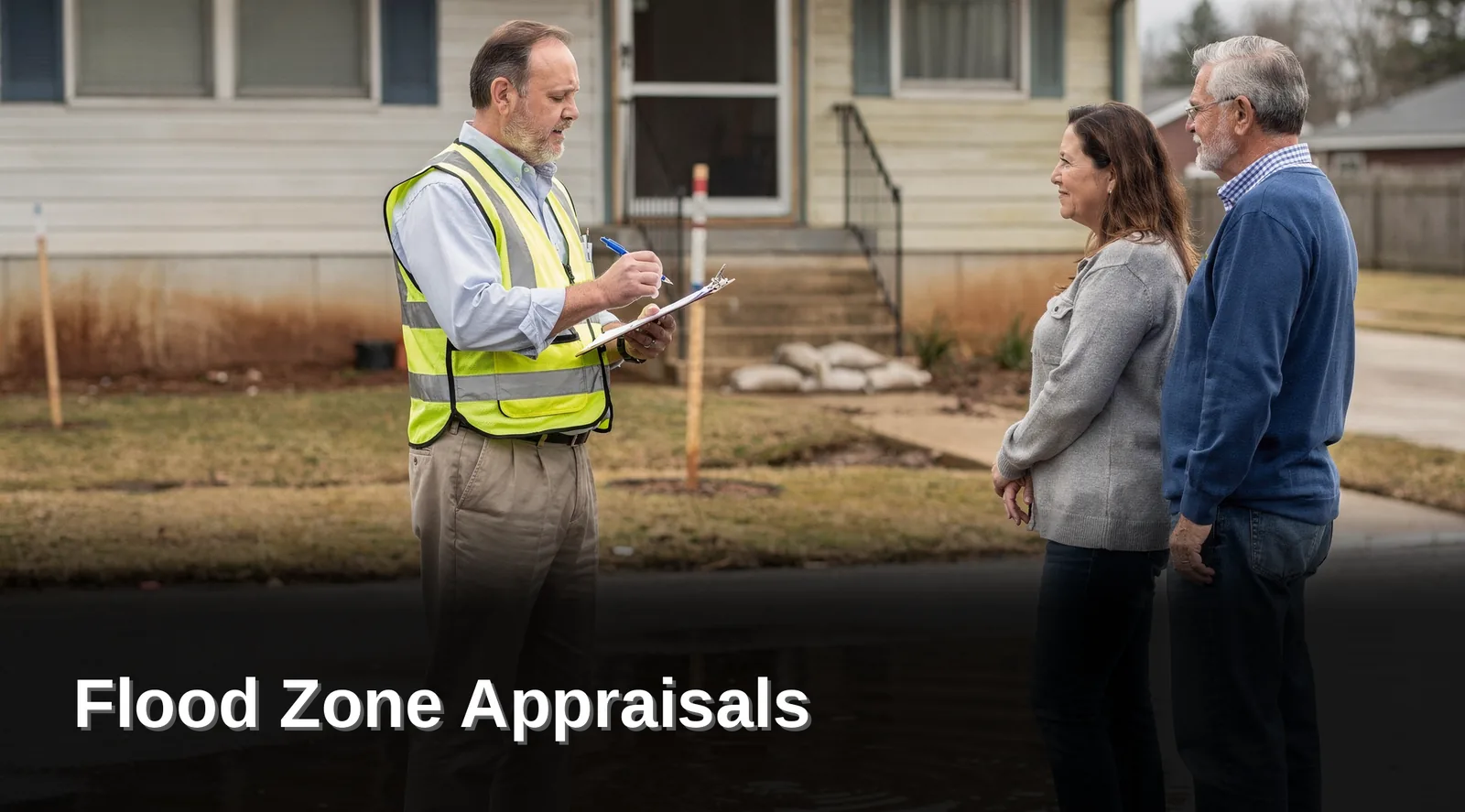
In coastal Florida and along the Connecticut shoreline, a home’s flood risk is part of its value. Buyers now ask about flood zones, elevation, and insurance before they ask about countertops. If you are getting an appraisal for an estate, a divorce, a tax appeal, or a sale, here is how flood exposure is handled and what documents help.
Key Takeaways
- FEMA flood zones show risk, but elevation and construction tell the appraiser much more.
- An elevation certificate compares your lowest floor to the base flood elevation, which drives flood insurance cost.
- Comparable sales with similar flood exposure give the most reliable value.
- Major repairs or improvements in a flood zone can trigger the 50 percent rule, which affects what an owner can rebuild.
- Have your elevation certificate, insurance declarations, and repair records ready for the inspection.
How Flood Zones Work
FEMA flood maps divide land into zones. Zones that begin with A or V are Special Flood Hazard Areas, where a federally backed mortgage generally requires flood insurance. V zones face wave action along the coast. Zone X areas are lower risk, though they still flood at times.
The map is a starting point. Two homes on the same street in the same zone can face very different risk depending on how high each one sits.
What an Elevation Certificate Shows
An elevation certificate is a FEMA form completed by a surveyor or engineer. It records the elevation of the lowest floor, the garage, and key equipment, and compares them with the base flood elevation for the property. A home built or raised well above that level is usually cheaper to insure and more appealing to buyers than an older ground-level home nearby.
If you do not have one, check your closing documents, your insurance agent, or your local floodplain office. Many communities keep copies on file.
| Factor | What the appraiser looks at |
|---|---|
| Flood zone | Zone designation and whether comparables share it |
| Elevation | Lowest floor relative to base flood elevation |
| Construction | Raised foundation, flood vents, elevated equipment |
| Insurance cost | Effect on buyer demand and monthly carrying cost |
| Storm history | Past flooding, repairs, and quality of the work |
How Flood Risk Affects Value
Appraisers do not apply a flat discount for a flood zone. They look at what buyers have actually paid. The strongest evidence comes from recent sales of homes with similar zone, elevation, and construction. Where those are scarce, the appraiser explains how adjustments were made.
In Florida, flood insurance has become a bigger part of the conversation. NFIP pricing now reflects each property’s individual risk, and Florida requires many Citizens Property Insurance policyholders to carry flood coverage. Florida sellers also now have a flood disclosure to complete. All of this means buyers are better informed about flood cost than they used to be, and sales prices reflect it. Our article on waterfront and coastal appraisals goes deeper.
The 50 Percent Rule After Storms
In a flood zone, if the cost of repairs or improvements reaches 50 percent of the structure’s market value, the building generally has to be brought up to current flood standards, which can mean elevating it. Local floodplain offices make that call. Some owners provide an independent appraisal of the structure’s value as part of that process, so ask your local office what it accepts before ordering one. This came up across Southwest Florida after recent hurricanes and matters along parts of the Connecticut shore as well.
Florida and Connecticut Examples
In Manatee and Sarasota counties, homes on Anna Maria Island, Longboat Key, and along the Manatee River can sit in high-risk zones, while homes a short drive inland in Palmetto, Parrish, or Lakewood Ranch often do not. Along the Connecticut shoreline, towns like Fairfield, Norwalk, and Mystic have similar splits between low-lying neighborhoods and higher ground. See also coastal appraisals in Connecticut.
What to Have Ready
- Elevation certificate, if you have one
- Flood and homeowners insurance declarations pages
- Records of any flood damage, repairs, or elevation work, with dates
- Permits for any raising, flood vents, or equipment relocation
Our homeowner preparation tips cover the rest.
How Heritage Valuation Group Can Help
We appraise coastal and inland homes for estates, divorce, tax appeals, and pre-listing across both states. Catherine Hall has appraised homes since 1993 and comes from a three-generation appraisal family. She is based in Palmetto and works throughout Florida, and her daughter, Madeline Hall, appraises alongside her in both states. We focus only on residential property and work directly with each client.
Related reading: Bradenton and Lakewood Ranch, Naples, and Fort Myers and Cape Coral. See our Florida and Connecticut service overviews.
Frequently Asked Questions
Does being in a flood zone automatically lower my appraisal?
No. The appraiser looks at what buyers have paid for similar homes with similar flood exposure. Elevation and construction often matter more than the zone label.
What is an elevation certificate?
A FEMA form, completed by a surveyor or engineer, that compares your home’s lowest floor and equipment to the base flood elevation for the property.
Where can I find my elevation certificate?
Check your closing documents, ask your insurance agent, or contact your local floodplain or building office.
Does flood insurance cost affect value?
It can. Higher carrying costs reduce what some buyers can pay, and buyers are better informed about flood cost than they used to be.
What is the 50 percent rule?
In a flood zone, if repair or improvement costs reach 50 percent of the structure’s market value, the building generally must meet current flood standards. Your local floodplain office applies the rule.
How do I get started?
Call 888-602-8322 or use the request form. Tell us the address, property type, and purpose, and we will send a clear quote before any work begins.
Conclusion
Flood risk is now part of how buyers value homes in coastal Florida and Connecticut. An appraisal that uses comparables with similar flood exposure, and documents elevation and construction, gives you a value you can rely on.
Need an appraisal for a coastal home? Request a quote or call 888-602-8322. You will get a clear price before any work starts.